You can't count calories precisely when eating out, and you don't need to. The real job is not to skip the meal and not to lowball it. First look for calories on the menu or the chain's website. If there aren't any, break the plate into parts (protein, side, sauce, oil), estimate each one, and log sauces and oil on the generous side.
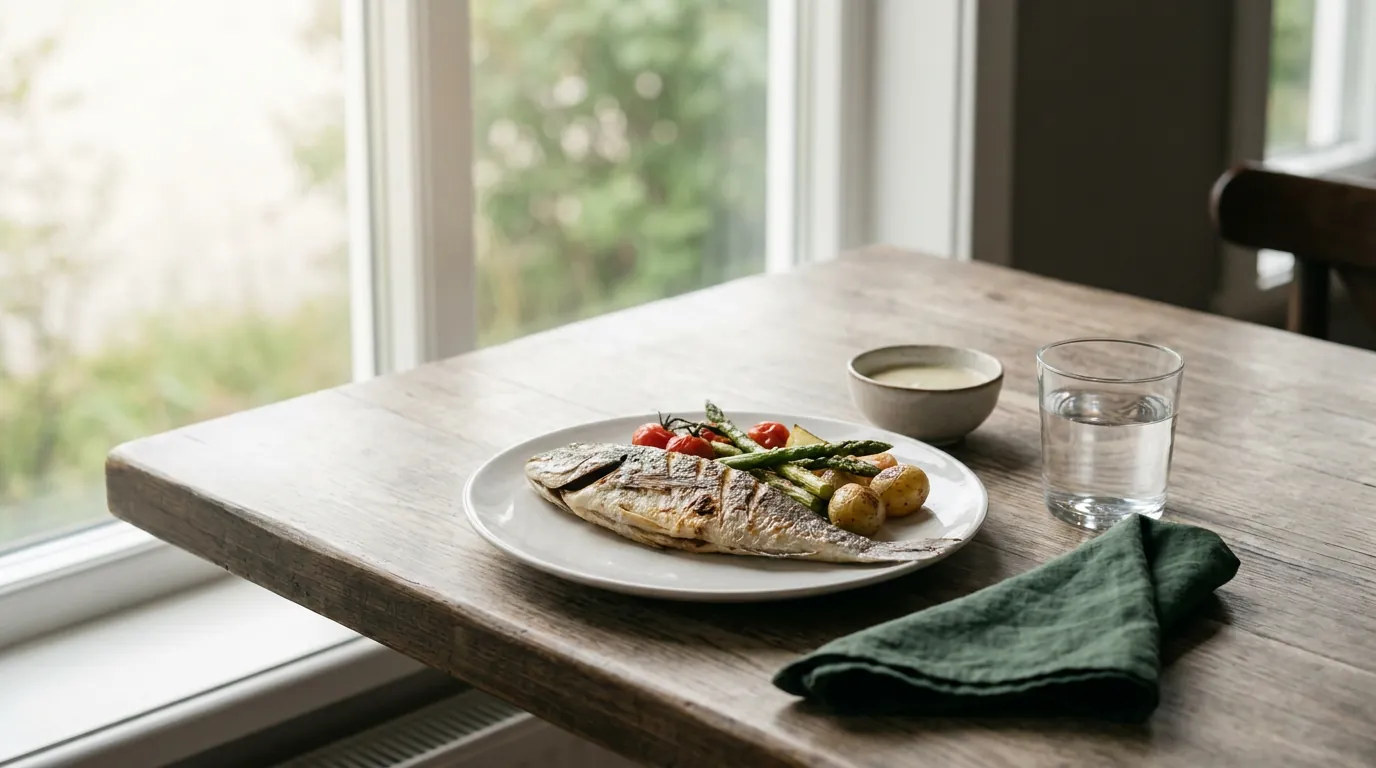
The menu or the chain's website: your most accurate option
Plenty of restaurant chains, fast-food places and coffee shops publish calories: on the menu, in their ordering app or on their website. If the number is there, use it. It's worked out from the recipe and a standard serving, which is closer to the truth than any guess by eye.
A couple of caveats. The menu number usually covers the dish as written. If you asked for double sauce, added cheese or went for a large drink instead of a medium, adjust the entry. And check what the number refers to: per serving or per 100 g. People mix these up all the time.
If you didn't finish it, log what you ate: "half the pizza from the menu" is more accurate than a whole pizza or a blank line in your diary.
A small independent café or restaurant probably won't list calories at all. That's where the second method comes in.
Break the plate into parts
Any restaurant dish is a few recognizable parts. A piece of fish or meat. A side. Vegetables. Sauce. The oil it was all cooked in. Each part on its own is much easier to estimate than "seafood linguine" as a whole.
For estimating without a scale, the hand method works well: a palm-sized piece of meat or fish, a fist-sized side, and so on. It's covered in detail in how to count calories without a scale; here we'll stick to what makes eating out different from home.
| Part of the plate | How to estimate | What to watch for |
|---|---|---|
| Meat, fish, poultry | By palm: how many palms are on the plate | Fried or grilled, breaded or battered |
| Side: potatoes, rice, pasta | By fist, as cooked food | Fries and pasta in cream sauce are much denser than a plain boiled side |
| Vegetables and salad | Barely move the total on their own | The dressing often counts for more than it looks |
| Sauce | How many spoons, in a dish or on the plate | Cream, cheese and mayo-based sauces are the heaviest |
| Oil | You can't see it, but it's in almost everything | Count at least a spoon per dish if anything was fried |
| Bread and drinks | Separate entries | The bread basket and sweet drinks are the first things forgotten |
Once the parts are sorted, the entry reads like "grilled salmon, one palm; mashed potatoes, one fist; salad with dressing; sauce on the side". That you can count.
Why estimate high instead of "somewhere in the middle"? Because restaurant mistakes almost always go one way. Hidden oil, sauce under the steak, butter in the mash all add calories; none of them take any away. A kitchen rarely puts less fat on your plate than you'd guess. Log a dish at the low end and have it turn out heavier, and the error quietly eats part of your deficit, and a month later you can't work out where it went. Log it high and overestimate a bit, and nothing bad happens: at worst your week was slightly better than the diary said. So the rule is simple: torn between two numbers, take the bigger one. And don't try to guess to the calorie. The gap between "about 700" and "about 750" doesn't matter over a week. A dinner that never got logged does.
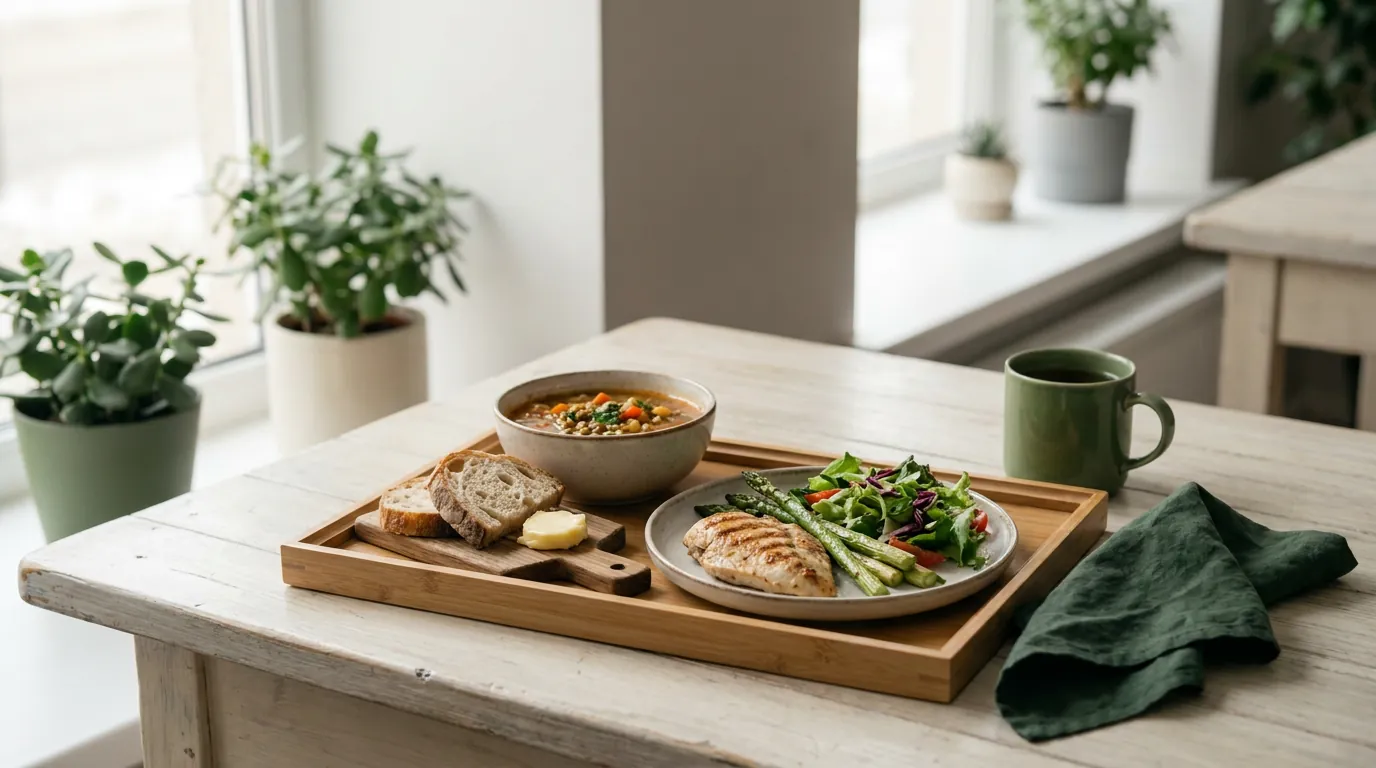
Where the calories hide: oil, sauces, dressings, drinks
Restaurant food usually carries more oil than the plate suggests. A cook doesn't measure it by the spoon the way you might at home. Oil in the pan, oil in the mash, a knob of butter on the finished steak for shine. None of it shows on the plate.
For reference: one tablespoon of olive oil is 13.5 g and about 119 kcal, according to USDA FoodData Central (entry "Oil, olive, salad or cooking", 171413). If a dish is fried or glistening, add at least one of those spoons to the entry. If it's clearly swimming in oil, add two.
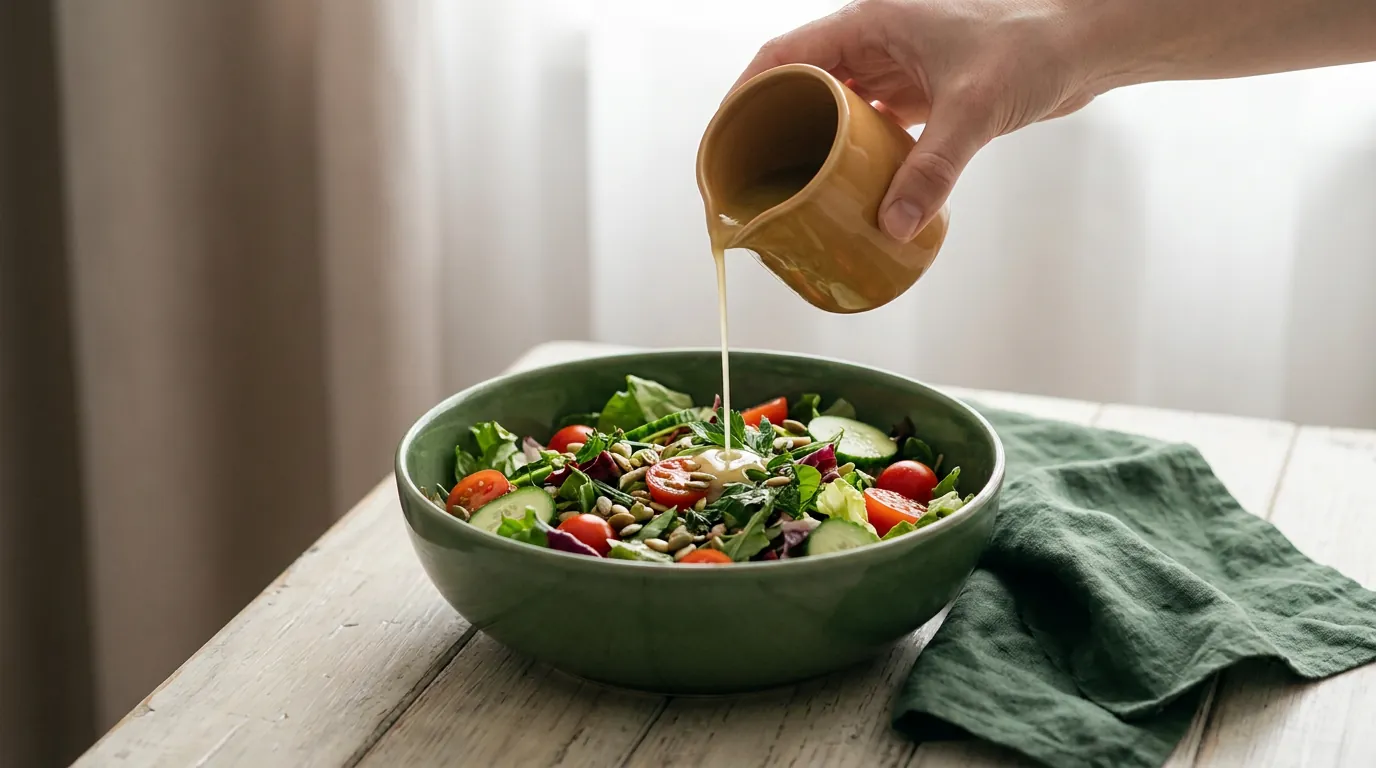
Sauces and dressings work the same way. A salad is light on its own, but an oil- or mayo-based dressing can outweigh all the vegetables in calories. An easy trick: ask for the sauce on the side. Then you can see how much there is and decide how much goes on.
Log drinks as their own line. Lemonade, juice, cocktails, beer, coffee with cream and syrup can easily match the main course, and they're the thing people skip most often.
Fast food, coffee shops, lunch specials, delivery
Each format has its own traps.
Fast food. The easiest case: big chains almost always have calories on their website or app. Log every item in the order separately, sauce and drink included. Don't skip the fries, dips and soda: together they make up a big share of the order.
Coffee shops. The coffee itself is next to nothing; the milk, cream, syrups and the pastry alongside decide everything. A large whole-milk latte with a croissant is a full meal, not "just a coffee". If the coffee shop lists calories online, take them from there.
Lunch specials. Usually three or four straightforward items: soup, a main, a salad, bread, sometimes a drink. Log each one. Soup by the bowl, the main by palm and fist, the salad with its dressing. Don't forget the bread and the drink.
Delivery. Easier than a restaurant in one way: many delivery apps list the weight of a dish, and sometimes the calories. If there's a weight but no calories, find a similar dish with known calories and work it out by weight.
How to leave room in your day
If you know there's a restaurant dinner tonight, don't starve all day to "earn" it. That usually means arriving starving and eating twice what you planned.
The gentler version works better: normal breakfast and lunch, just simpler, leaning on protein and vegetables, without dessert or snacks. That leaves room in the day, and you walk into the restaurant calm instead of ravenous. How to fit days like this into a week so the weekend doesn't swallow your whole deficit is covered in a plan for your first week in a deficit.
And judge the week as a whole. One dinner over target doesn't wreck anything if the other days are under. What does wreck it is a dinner that never got logged, because then you can't see the real picture.
How to log it in 10 seconds
Nobody wants to sit over a restaurant plate with an app, searching for "seafood pasta, restaurant style". So logging has to be fast, or it won't happen.
The easiest for me is to snap the plate right at the table, before I start eating, and send it to a Telegram bot. It works out what's on the plate, counts calories and macros, and fine-tunes calories against the USDA database. If the photo doesn't show what's inside, like sauce under the meat or butter in the mash, add it in words. Voice works too: "carbonara, large portion, glass of wine". The bot is free and lives where you already chat.
And since eating out is its own line not just in calories but in your budget too, have a look at how much to spend on groceries, including what eating out really costs you.
 Reminders
 Water and weight