TDEE calculator: maintenance calories per day
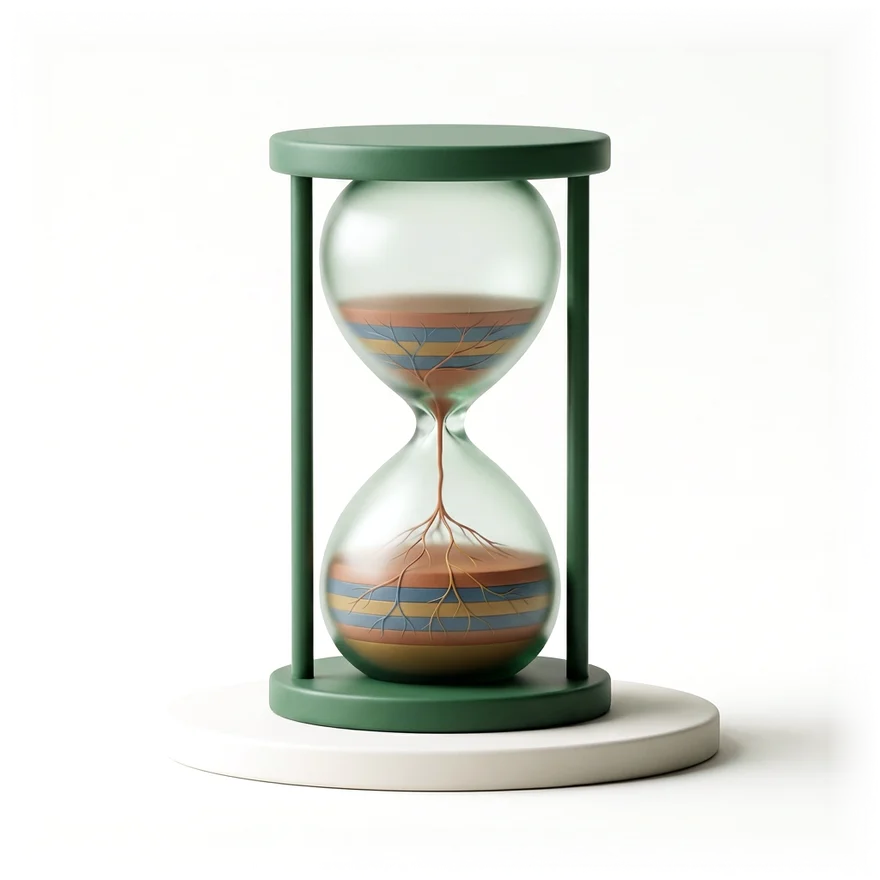
TDEE is your maintenance calories: everything you burn in a day, basal metabolism plus all your movement. The calculator takes your BMR from the Mifflin-St Jeor equation (1990) and multiplies it by an activity level from 1.2 to 1.9. A lightly active 30-year-old man, 178 cm, 80 kg, burns about 2,430 kcal a day; a woman of the same age, 165 cm, 65 kg, about 1,884. Eat that much and your weight holds steady.
 Track it every day in Telegram
Where the number comes from
The formula, a worked example and where it stops working
What TDEE is
TDEE stands for Total Daily Energy Expenditure: every calorie you burn in a day, all in. It is your maintenance number, the intake at which your weight stays put. Eat less and you lose, eat more and you gain.
It takes two steps. First your basal rate, the burn at complete rest, from the Mifflin-St Jeor equation (Mifflin MD, St Jeor ST et al., American Journal of Clinical Nutrition, 1990); how it works and how it compares with other formulas is covered in the BMR calculator. Then the basal rate is multiplied by an activity factor from 1.2 to 1.9. The idea of basal rate times an activity factor comes from FAO/WHO/UNU, Human energy requirements, chapter 5, 2004; the numbers 1.2 to 1.9 are the standard set online calculators use.
Inside TDEE there are four parts: basal metabolism, digesting food, exercise and everyday movement — walking, commuting, housework, a job on your feet. The activity factor tries to capture the last three in a single number.

Activity multipliers: how to pick yours
The multiplier is the weakest link in the maths. Five rough buckets for the whole variety of human life, and picking the wrong bucket costs more than the formula's own error. For a 30-year-old woman, 165 cm and 65 kg, the calculator puts light and moderate 240 kcal a day apart: 1,884 against 2,124.
Look at your ordinary day, not just your workouts. If you are torn between two buckets, take the lower one: the scale will tell you within a couple of weeks if it is too low. If you go by a step counter, see how many steps a day you need.
- ×1.2 — sedentary: desk job, car, no exercise
- ×1.375 — light: 1-3 workouts a week, or a job where you walk a lot
- ×1.55 — moderate: 3-5 workouts a week
- ×1.725 — high: 6-7 workouts a week, or heavy physical work
- ×1.9 — very high: training twice a day, professional sport
TDEE chart for women by weight and activity
Find your weight and activity level; where they meet is your daily burn. The BMR column is your burn at rest, the number everything else is multiplied from. Age 30 and height 165 cm are in the caption; if yours differ, put them in the calculator above.
| Weight | BMR | ×1.2 | ×1.375 | ×1.55 | ×1.725 | ×1.9 |
|---|---|---|---|---|---|---|
| 50 kg | 1,220 | 1,464 | 1,678 | 1,891 | 2,105 | 2,318 |
| 60 kg | 1,320 | 1,584 | 1,815 | 2,046 | 2,277 | 2,508 |
| 70 kg | 1,420 | 1,704 | 1,953 | 2,201 | 2,450 | 2,698 |
| 80 kg | 1,520 | 1,824 | 2,090 | 2,356 | 2,622 | 2,888 |
| 90 kg | 1,620 | 1,944 | 2,228 | 2,511 | 2,795 | 3,078 |
| 100 kg | 1,720 | 2,064 | 2,365 | 2,666 | 2,967 | 3,268 |
Calories a day. Woman, 30, 165 cm. Mifflin-St Jeor BMR times the activity factor, the same maths as in the TDEE calculator.
TDEE chart for men by weight and activity
The same for a 30-year-old man of 178 cm. Notice how the gap between columns grows with weight: the multiplier scales your whole basal rate, so for a bigger person the choice of bucket matters even more.
| Weight | BMR | ×1.2 | ×1.375 | ×1.55 | ×1.725 | ×1.9 |
|---|---|---|---|---|---|---|
| 60 kg | 1,568 | 1,881 | 2,155 | 2,430 | 2,704 | 2,978 |
| 70 kg | 1,668 | 2,001 | 2,293 | 2,585 | 2,876 | 3,168 |
| 80 kg | 1,768 | 2,121 | 2,430 | 2,740 | 3,049 | 3,358 |
| 90 kg | 1,868 | 2,241 | 2,568 | 2,895 | 3,221 | 3,548 |
| 100 kg | 1,968 | 2,361 | 2,705 | 3,050 | 3,394 | 3,738 |
| 110 kg | 2,068 | 2,481 | 2,843 | 3,205 | 3,566 | 3,928 |
Calories a day. Man, 30, 178 cm. Mifflin-St Jeor BMR times the activity factor, the same maths as in the TDEE calculator.
One person, five activity levels
A woman of 30, 65 kg, 165 cm. Her basal rate is 1,370 kcal whatever her lifestyle; only the multiplier changes her daily burn. The numbers match the calculator above.
- desk job, no exercise: 1,370 × 1.2 = 1,644 kcal
- training twice a week: 1,370 × 1.375 = 1,884 kcal
- four workouts a week: 1,370 × 1.55 = 2,124 kcal
- training almost every day: 1,370 × 1.725 = 2,364 kcal
- two sessions a day: 1,370 × 1.9 = 2,603 kcal — nearly 1,000 kcal more than the office version
How to use your TDEE
TDEE is the starting point for any goal. You take something off it or add something to it, and each case has its own calculator.
Check the number against the scale: eat roughly your TDEE for two weeks and watch the average. How to do that, and the cases where the formula does not fit at all (pregnancy, teenagers, thyroid disease, lots of muscle), are covered in the daily calorie calculator.
- Weight loss — TDEE minus 250-750 kcal depending on pace, but no more than 20%. The calorie deficit calculator picks the pace and the floor
- Maintenance — eat roughly your TDEE
- Muscle gain — TDEE plus 10-20%, more in the calorie surplus calculator
- Protein, fat and carbs for any of these targets come from the macro calculator
How we calculate
The formulas and limits are the same as in the CalCash bot: the site and the bot run the same code. Here is what goes into the number.
- Resting burn (BMR) — the Mifflin-St Jeor equation: 10 × weight in kg + 6.25 × height in cm − 5 × age, plus 5 for men or minus 161 for women (Mifflin MD, St Jeor ST et al., American Journal of Clinical Nutrition, 1990).
- Daily burn (TDEE) — BMR × an activity factor from 1.2 to 1.9. The idea of "BMR × physical activity level" comes from FAO/WHO/UNU, Human energy requirements, chapter 5, 2004. The 1.2–1.9 numbers themselves are the factors calculators commonly use; we could not trace their original source, so we do not pin them on anyone.
TDEE is the burn side. The intake side has to be logged every day, and the easiest way is to hand it to a bot that counts calories from a photo: a picture of your plate, a voice note or a few words of text, and it adds the meal to your day.
Frequently asked questions
What is TDEE in simple terms?
It is how many calories you burn in a day with everything you do: your basal rate at rest plus movement and exercise. Eat exactly that and your weight holds. For a 30-year-old woman, 165 cm and 65 kg, training twice a week, the calculator gives about 1,884 kcal; for a 30-year-old man, 178 cm and 80 kg, about 2,430.
How is TDEE different from BMR?
BMR is what your body burns at full rest (just running your organs). TDEE is BMR plus everything else — workouts, walking, any movement. With the calculator's multipliers from 1.2 to 1.9, TDEE runs 20-90% higher than BMR.
Which activity level should I pick?
Go by your ordinary week, not your best one. Desk and car with no exercise — 1.2. One to three workouts or a lot of walking — 1.375. Three to five workouts — 1.55. If you are torn between two, take the lower: after two weeks the scale will show whether it is too low.
Why is my TDEE lower than my friend's at the same weight?
Weight is just one of five numbers in the Mifflin-St Jeor equation. Every 10 cm of height adds about 60 kcal to the basal rate, every 10 years of age takes off 50, and the whole thing is then multiplied by the activity factor. If she picked moderate and you picked light, that alone is around 240 kcal a day.
What if I never train but walk a lot?
Workouts are not the only activity. A job on your feet, walking commutes, stairs and housework all burn energy, and the same bucket covers them. Desk job plus a car — use 1.2. No gym but plenty of walking every day — you can try light activity, 1.375, and check it against the scale. To see what a single walk adds, use the calories burned walking calculator.
My TDEE dropped after losing weight — is that normal?
Yes. Weight sits right in the formula: 5 kg down is roughly 50 kcal off the basal rate, and more after the multiplier. That is why TDEE is recalculated every 3-4 kg and whenever your training changes: the number that worked at the start is too high at your new weight.
 Reminders
 Water and weight