Money that "just disappears" almost always goes on small, repeated purchases you don't notice one by one: coffee, takeout, little things from Amazon. You can't stop what you can't see. So start with two weeks of honestly logging everything you spend, then pick one leak and work on that one only.
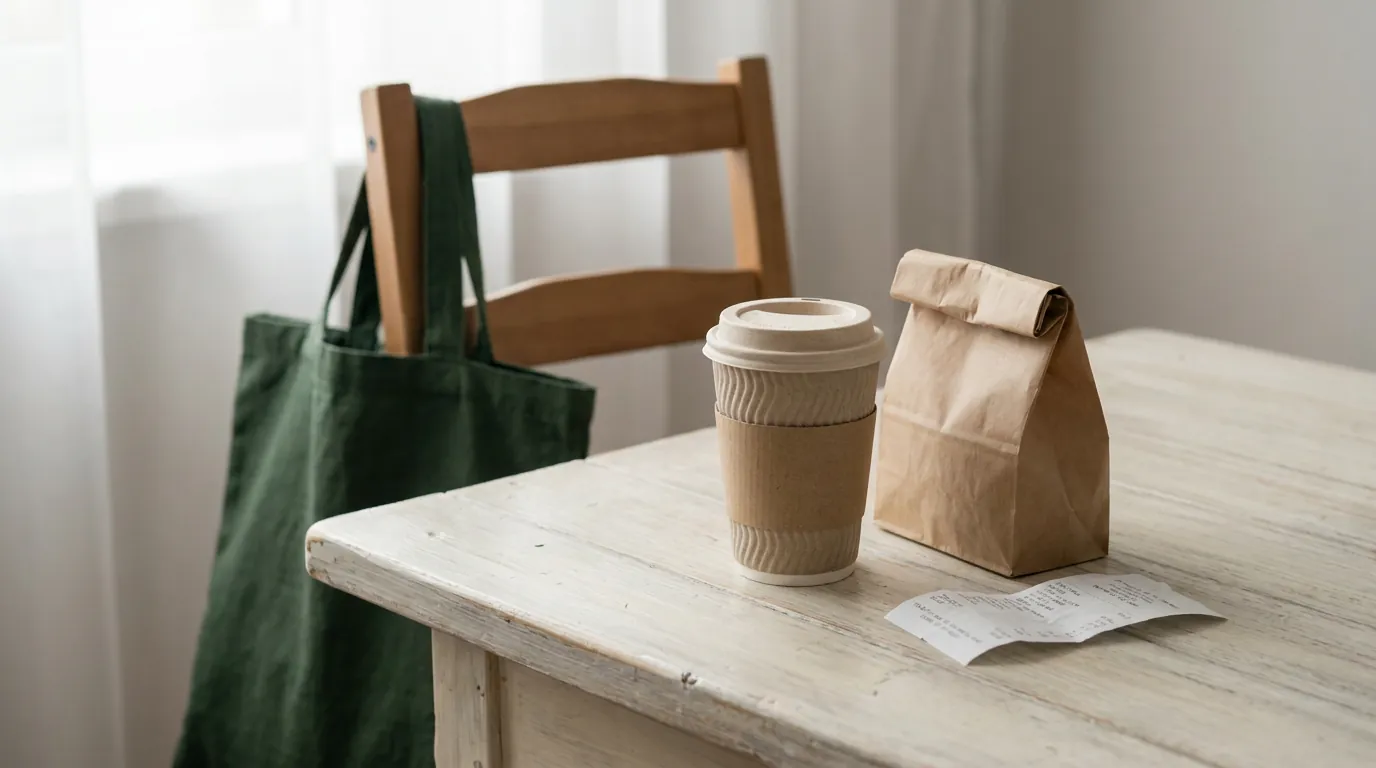
Why the small stuff is invisible
You remember big purchases. A TV, a jacket, concert tickets: you think those through, compare, sometimes regret them later. You don't think through a $5 coffee, it's just coffee. Same with $18 takeout: it was a long day.
Your brain judges each purchase on its own, and on its own each one is harmless. It doesn't add up the month. So when the account is empty on the 25th, it feels like you didn't buy anything special. And that's true, you didn't. You bought ordinary things, many times.
For me it was delivery. I was sure I ordered "sometimes." Once I started logging, "sometimes" turned out to be several times a week. None of those orders felt like too much. Each had a reason: got home late, fridge empty, early start tomorrow. The problem wasn't any single one, it was how many there were, and I couldn't see that.
Two weeks of logging: what to write down
Two weeks is the shortest stretch that covers both weekdays and weekends. A month is better, but two weeks is easier to stick with and already shows the picture.
The rules:
- Everything, including small change. Gum, a bottle of water, parking. Especially small change, that's the whole point.
- Right away, not in the evening from memory. By evening half the small stuff is gone.
- Amount and what for, short: "coffee $5", "amazon $24", "uber $12". Nothing else needed.
- Don't try to save. For two weeks you're watching, not fixing. If you start holding back, you won't see your normal life.
The fastest way is to type the purchase in one line while you're still at the register. Why that's easier in a messenger than in an app is in expense tracking in Telegram. If you want categories filled in for you, our bot does that: you type "coffee $5" and it goes under food.
How to find your biggest leak
After two weeks, add up spending by category and sort from largest to smallest. Take fixed costs, like rent, utilities and loan payments, off the list right away: those aren't leaks.
Then don't look at the biggest category. Look at the one with lots of small entries. One $200 purchase is a decision. Twenty $10 purchases are a habit. Leaks live where the habits are.
Usually the top spot goes to one of these: eating out and delivery, coffee and snacks, online shopping, short rideshares, subscriptions you forgot about. Food has its own article: how much to spend on groceries.
Triggers: when the small spending happens
Small purchases rarely happen for no reason. There's usually a cue, and it helps to know yours.
Boredom. You scroll a shopping app not because you need something, but because there's nothing else to do. The cart fills itself.
Tiredness. After a long day you don't want to cook or take the bus. Delivery and rideshares are the most common "tired purchases."
"I earned it." Finished a project, survived the week, turned in the report, time for a treat. Treating yourself is fine. The trouble starts when there's a reason every day.
Notifications and marketing emails. A discount on something you weren't thinking about five minutes ago. A sale that "ends today." Their job is to create a reason that wasn't there.
If your log notes what state you were in, the triggers show up fast. Add one word: "delivery $20 tired."
What works: one leak, and a swap instead of a ban
The classic mistake is banning everything at once. "Starting Monday, no delivery, no coffee, no online shopping." By Wednesday it falls apart and you're back where you started, plus guilt.
What works is different. Take one leak, the biggest of your habits. Don't ban it, find a swap. The goal isn't to suffer, it's to make the usual purchase happen less often.
| Leak | How you spot it | What to swap it for |
|---|---|---|
| Evening delivery | Lots of entries after 8 pm on weekdays | A couple of 15-minute meals and the groceries for them at home |
| Coffee to go | The same amount logged every day | Coffee from home in a travel mug a few days a week |
| Online shopping | Many small orders, often in the evening or on weekends | Add to cart instead of buying, and review the cart once a week |
| Rideshares | Short trips when you're late or tired | Leave 10 minutes earlier on the days you ride most |
| Subscriptions | Auto-charges you forgot about | Once a month, go through the list and cancel what you didn't use |
| Promo emails | Purchases right after a notification | Unsubscribe from stores where you tend to overbuy |
For bigger impulse buys there's a separate trick, the 24-hour rule: if you want something that isn't a fixed expense, wait a day. It's covered in how to start budgeting and stick with it.
Once the first leak has shrunk and the new habit has held for a couple of weeks, move on to the next one. Not before.
How not to slip and quit
You will slip. You'll order delivery on the night you meant to cook, and buy another random thing online. That's not failure, that's a normal week. Failure is when you stop logging.
A few things that help:
- Keep logging everything, slips included. Especially slips. The log isn't a report to anyone, it's information for you.
- Look at the month, not the day. If there's less delivery this month than last, you're moving, even if you ordered twice yesterday.
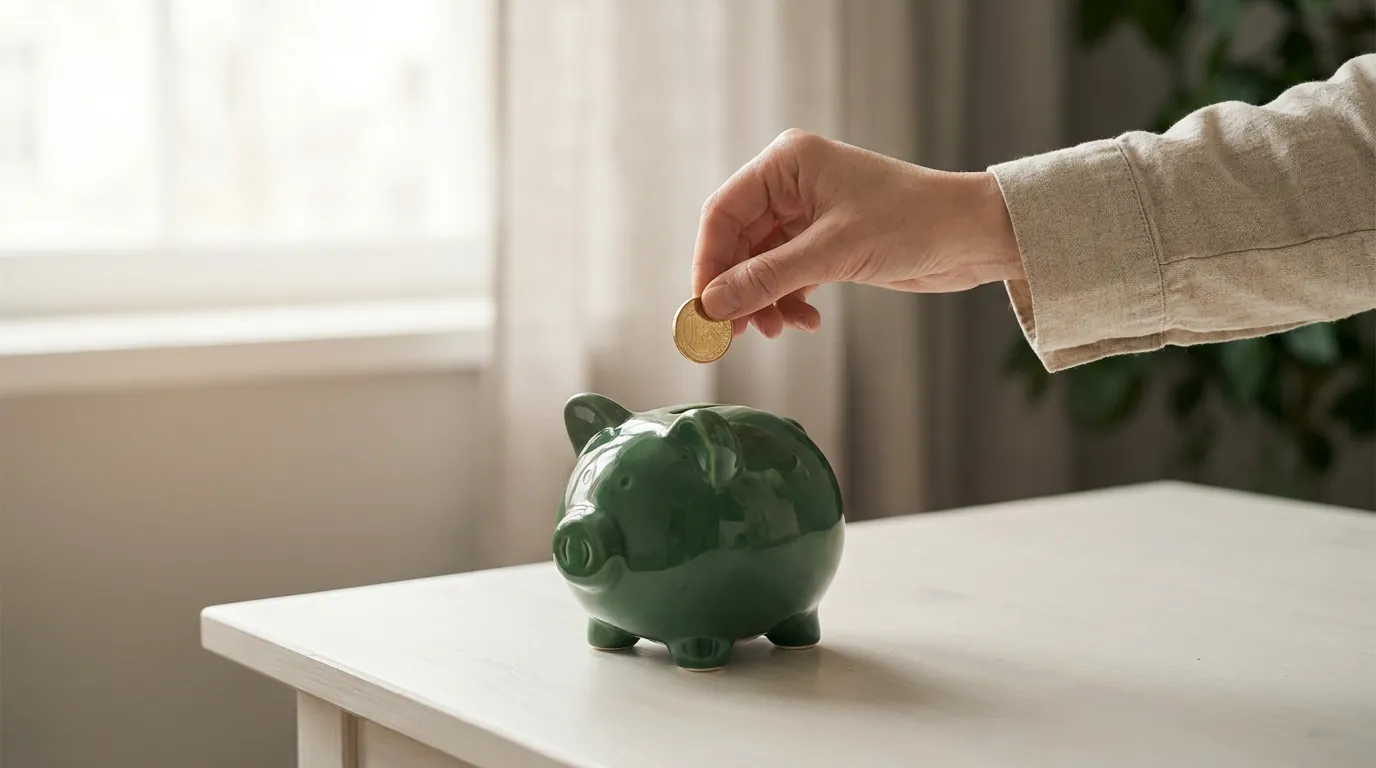
- Decide where the saved money goes. "Just spend less" is a weak motivator. "Into the emergency fund" or "for the summer trip" works better. If you want a ready-made way to split your income, see the 50/30/20 rule.
The goal isn't to never spend on small stuff. It's to spend on it when you decide to, not out of habit.
 Reminders
 Water and weight